McLED

Optics

Dow’s New Study Bridges the Knowledge Gap on Blue Light Photothermal Aging of Thermoplastic Lens Clusters in LED lighting

Dow announced the results of a new study that evaluated the aging performance of commercially available lens clusters in LED lighting. The study examined blue light photothermal aging of both silicone and thermoplastic optics made of polycarbonate (PC), polymethyl methacrylate (PMMA) and…

Published by LED professional ·
Dow’s New Study Bridges the Knowledge Gap on Blue Light Photothermal Aging of Thermoplastic Lens Clusters in LED lighting

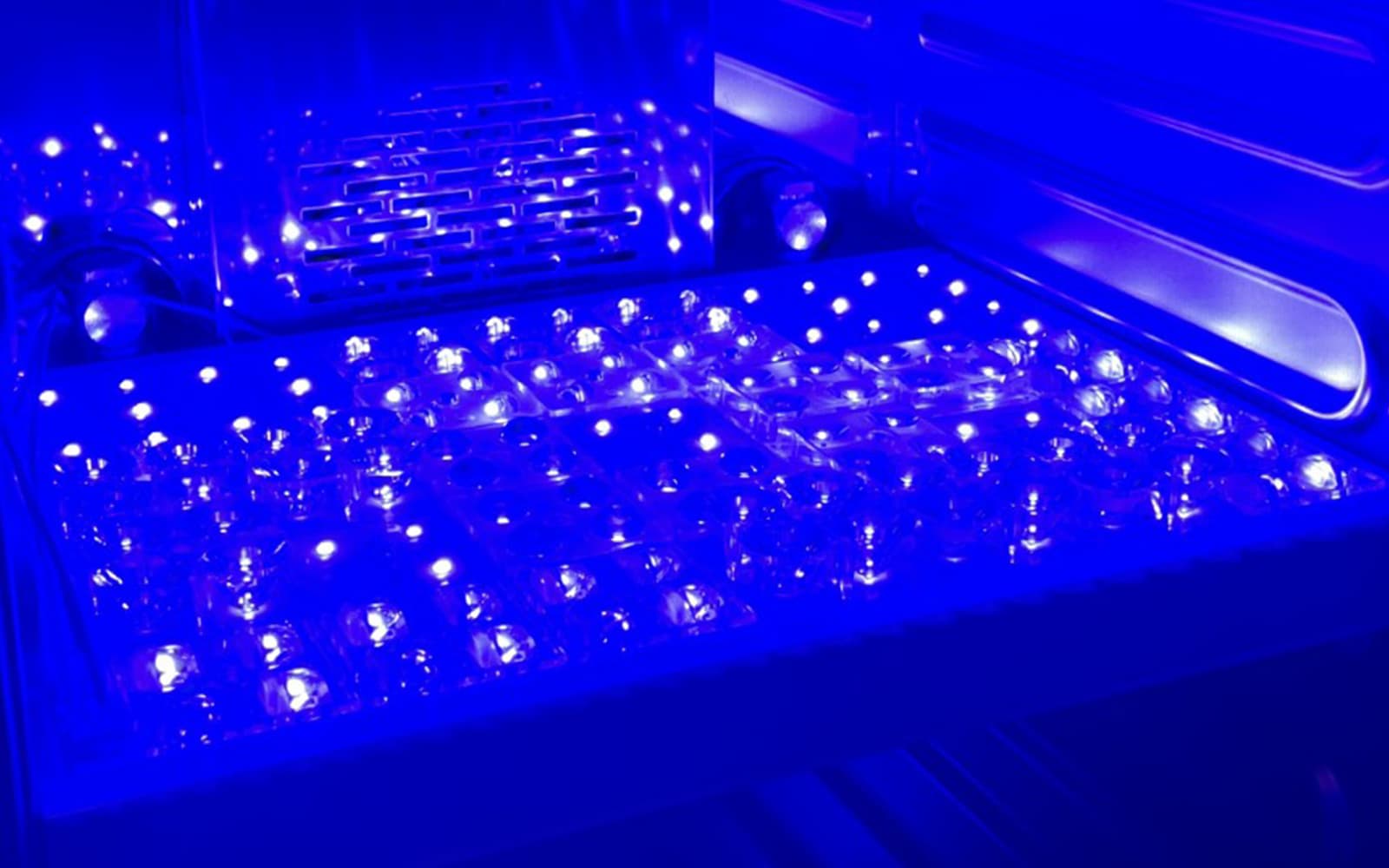
Dow’s study subjected lens clusters to photothermal stress similar to the operating conditions of optics in luminaires for high-power LED lighting. The principal finding is that most of the tested thermoplastic lens clusters discolour over time and ultimately fail catastrophically. Gradual degradation by discolouration is known to reduce light output, but the study shows that catastrophic failure may be difficult to predict and requires long test times.

Dow’s new study arrives at a time when the global lighting industry is growing rapidly, fueled by increased adoption of energy-efficient LED modules. The longevity and light output efficiency of these LED modules is critical, but thermoplastic optics may present limitations in terms of performance and reliability depending on their specific configurations.

“Our study was conducted to bridge the knowledge gap on blue light photothermal aging of lens clusters commonly used by luminaire makers for applications such as street and sports lighting,” said Martijn Beukema, Technical Service & Development Scientist and Application Technology Leader for Lighting at Dow. “Luminaire manufacturers are encouraged to take this data into account when choosing optical materials during the design process, and to recognize silicone optics as a reliable alternative that can enhance product longevity and minimise the risk of major failures.”

All of the data from this study is available by accessing Dow’s white paper, titled “Blue Light Photothermal Aging of Thermoplastic and Silicone Lens Clusters,” authored by Martijn Beukema and Kevin Van Tiggelen, Senior Technical Service & Development Scientist for Lighting at Dow. Download the full paper here.

For information on Dow’s silicone materials for injection molded optics, visit their webpage.

Did you like this article?

Share this article

You could also like this

LEDs & Light Sources

Cree LED packs four colors into a tiny 2.1 mm XLamp X21 LED

Cree LED, a Penguin Solutions brand, launched the XLamp X21 Multi-Color LEDs on 10 November 2026. Each one holds four LED chips in different colors in a 2.1 x 2.1 mm ceramic package, the smallest in Cree LED’s multi-color range. The tiny light source works with optics that are 29% smaller and still gives a tighter beam. 11 die colors, 14 versions; samples are available now.

Organizations

Inteplast Group acquires family-owned ALP Lighting Components

Inteplast Group, a US plastics and paper manufacturer with more than 10,000 employees, acquired ALP Lighting Components on November 1, 2026. ALP, family-owned since its founding in 1972, makes optics, reflectors, louvers and other parts for light fixtures and has nearly 230 employees at four sites in the US and Mexico. President Adam Mayse stays on and expects capacity and product range to grow.

Digital Photonics

Mercedes-Benz turns car windows into LED and holographic displays

Mercedes-Benz is developing LED displays laminated into car windows. Mini LEDs in the rear window can show brake lights, warning symbols or traffic information to drivers behind; micro LEDs suit small, high-resolution displays. A holographic projection turns the windshield into a screen. Shown on 3 November 2026 with an 800-volt Power Converter delivering up to 3 kW, all are still in development.

Optics

Tresky eliminates the need for an optical beamsplitter during DIE bonding

Tresky GmbH has developed a digital beamsplitter that replaces traditional optical components in die bonding systems by digitally merging camera images. The software eliminates light loss, reflections, and mechanical alignment challenges while maintaining full resolution and enabling flexible image adjustments. Designed for precision applications, it supports R&D, prototyping, photonics, optoelectronics, and advanced packaging.

Luminuscree ledEdison optoTE connectivityLTF TechnologyLoreos

The latest Press Releases

Explore All

Stay current with our monthly Update from the lighting industry

LEDprofessional Newsletter

You will receive a confirmation e-mail. Unsubscribe anytime.