Illuminating Engineering Society and National Lighting Bureau Sign Memorandum of Understanding to Advance Lighting Excellence
The Illuminating Engineering Society (IES) and the National Lighting Bureau (NLB) have signed a Memorandum of Understanding (MoU) establishing a strategic partnership to advance collaboration in lighting education, public outreach, and industry engagement.
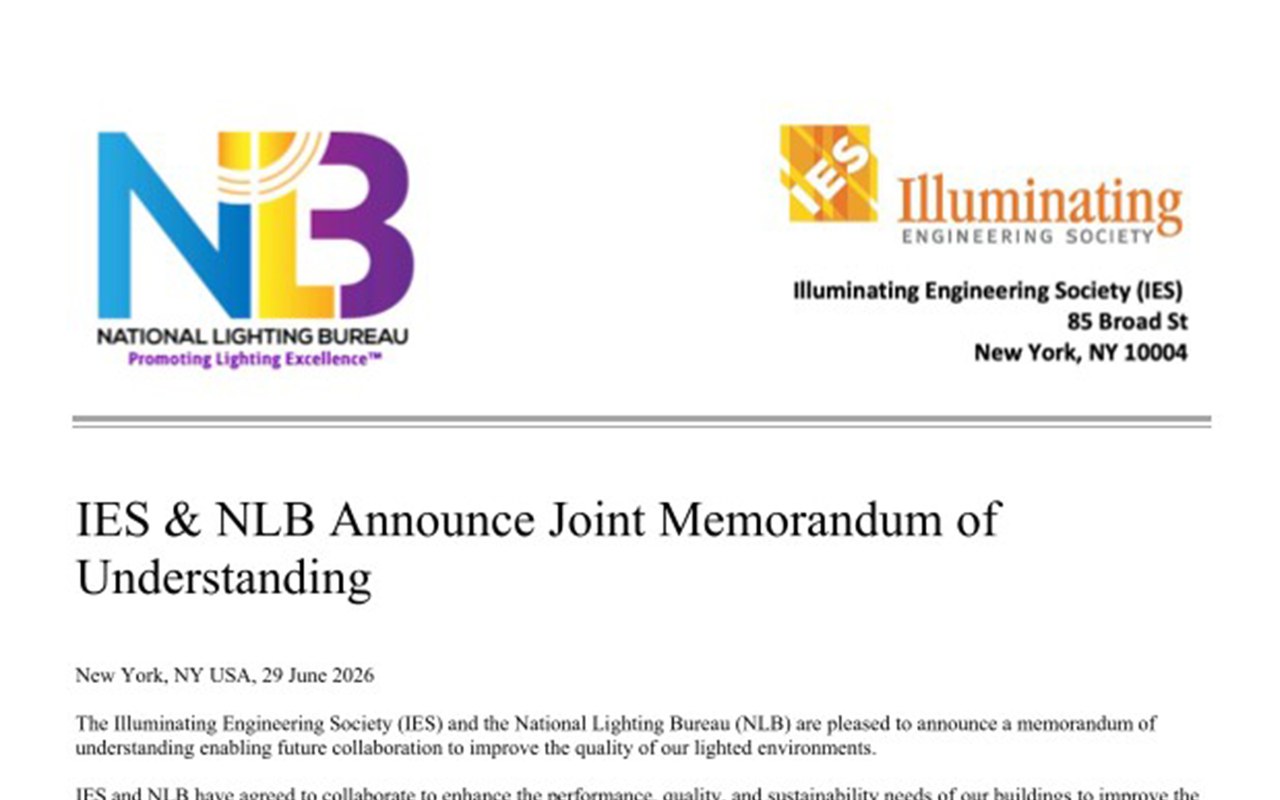
The agreement reflects a shared commitment to improving the quality, performance, and sustainability of the built environment through enhanced cooperation between two of the lighting industry’s leading organizations. By combining their respective expertise and resources, IES and NLB aim to strengthen professional education, increase public awareness of the value of quality lighting, and support initiatives that benefit communities and the lighting profession alike.
“The National Lighting Bureau and the Illuminating Engineering Society share a longstanding commitment to advancing lighting knowledge and improving the quality of lighting for people and communities,” said Mary Beth Gotti, Chairperson of the Board, National Lighting Bureau. “This Memorandum of Understanding provides a framework for the National Lighting Bureau and the Illuminating Engineering Society to leverage our respective strengths in support of education, public outreach, and industry advancement.”
Brienne Willcock, Associate Director of the Illuminating Engineering Society, welcomed the partnership, emphasizing the complementary strengths of the two organizations.
“At its core, the work of IES is about connecting people with knowledge. When organizations create more opportunities to share expertise and engage with one another, the benefits extend far beyond our profession. Some of our members invest their time and knowledge in both IES and NLB for the same reason: a belief in the value of quality lighting and its impact on people. This partnership builds on those relationships and creates new opportunities for education and public benefit.”
The collaboration establishes a framework for joint initiatives focused on:
- Advancing lighting education and professional development
- Promoting high-quality, sustainable lighting practices
- Expanding public outreach and awareness of the value of lighting
- Supporting industry engagement and collaboration
- Encouraging research, innovation, and knowledge sharing across the lighting community
Founded in 1906, the Illuminating Engineering Society is a global authority on lighting standards, education, and technical knowledge, serving engineers, architects, designers, educators, manufacturers, contractors, utilities, and other lighting professionals. IES is responsible for publishing many of the industry’s most widely recognized standards and recommended practices.
The National Lighting Bureau is an independent nonprofit organization dedicated to promoting excellence in lighting through education, awareness, and advocacy. NLB brings together lighting professionals, manufacturers, designers, engineers, educators, utilities, and industry organizations to advance understanding of lighting’s impact on safety, health, well-being, sustainability, and the built environment.
Through this partnership, IES and NLB reaffirm their shared vision of advancing lighting excellence by connecting expertise, fostering collaboration, and increasing awareness of the critical role quality lighting plays in enhancing people’s lives.
About the Illuminating Engineering Society (IES)
The Illuminating Engineering Society is a professional organization dedicated to improving the lighted environment through science, education, standards development, and collaboration. Since 1906, IES has served as the recognized technical and educational authority on lighting.
About the National Lighting Bureau (NLB)
The National Lighting Bureau is an independent nonprofit organization that promotes excellence in lighting through education, outreach, and collaboration. NLB works to increase awareness of the benefits of quality lighting for people, communities, and the built environment.
© 2026 Luger Research e.U. – Institute for Innovation & Technology
