
LED Light Testing: The Path to Zero Defects
The LED lighting industry has entered a new phase. LED modules are evolving into high-density LED architectures, characterized by extreme miniaturization and the integration of semiconductor technologies to support IoT connectivity, DALI-2 protocols, and smart sensing.
In this environment, where success is defined by the ability to deliver these innovations at a massive global scale, manufacturers can no longer rely on product features alone to stand out. Manufacturers must now prove they can maintain high quality standards across millions of units with total control on risks, including:
● The Cost of Rework. Success in high-volume markets depends on early-stage defects detection. Following the “Rule of Tens”, a $1 error at the semiconductor level escalates to $100 or more by the time it reaches a finished luminaire. When producing at scale, these undetected errors lead to massive scrap piles and complex rework cycles, stalling production velocity and jeopardizing total project margins.
● Brand Integrity. As smart lighting becomes increasingly commoditized, reliability remains one of the few meaningful differentiators. A high-profile recall caused by flickering or color shifting can permanently damage a manufacturer’s reputation and weaken its position with Tier-1 customers.
These pressures leave no room for doubt: LED products manufacturers must detect defects before batches leave the factory.
Secure your supply chain with zero-defect validation.
Talk to an LED Testing Expert Today...
Core Failure Modes in Modern LED Light Systems
Developing a robust defect detection strategy requires a precise mapping of the vulnerabilities inherent in LEDs. This raises a critical question for the production floor: which failure modes pose the greatest threat to the reliability and performance of modern LED light systems?
The reliability of a LED luminaire hinges on the interdependence of critical domains, such as: high-fidelity optical output, efficient thermal dissipation, precise electrical regulation, and the functional logic of the semiconductor controllers.
Because these domains are interdependent, a single unresolved defect triggers a cascade of performance inconsistencies across the entire LED light system. For manufacturers operating in high-volume environments, the primary failure modes driving significant concern include:
● Optical Inconsistencies. Beyond lumen output, modern LEDs can experience color and spectral drift. Variations in Correlated Color Temperature (CCT) and Color Rendering Index (CRI) over time can cause visible shifts that reduce visual comfort, especially in large LED module installations. Irregular light distribution can also create dark spots and hotspots that compromise safety and prevent the luminaire from meeting photometric uniformity requirements.
● Electrical Instability. The reliability of an LED light system depends on the integrity of the electromechanical interface with the PCBA. Poor bonding or soldering increases thermal resistance, raising operating temperatures and reducing brightness. Furthermore, inadequate current regulation from the driver is also a major cause of flicker, as defined by IEEE 1789 standards.
● LED Driver Performance Gaps. The heart of an LED light system is the LED driver. Instability in switching frequency, jitter, or signal integrity can lead to premature fatigue, reduced efficiency, and EMI non-compliance.
● Sensor Failures. In smart systems, failures in ambient light sensors or digital protocols such as DALI or Matter can create faulty conditions, causing the light to respond incorrectly to its environment or control commands.
What Manufacturers Must Adopt to Detect Failures at Line Speed
Identifying these failures is only part of the challenge. The real question is whether test equipment can detect them accurately enough at line speed.
Recent technical discussions show that LED testing is pushing toward more advanced solutions, driven by the need for uncompromising precision, complete coverage, reduced test costs, and high-speed execution.
To meet this mandate, manufacturers must adopt testing architectures that can support the most advanced LED and multi-LED technologies across a wide range of products.
This calls for automatic test methods that overcome the limitations of traditional fiber-optic setups, measure multiple optical and electrical parameters, and adapt easily to different application requirements. It also requires a consolidated software environment for data correlation and traceability, needed to support a zero-defect supply chain at full line speed.
Advanced Automatic Testing Platforms
To meet the demands of modern LED manufacturers, SPEA offers advanced automatic test equipment designed to combine precision, flexibility, and throughput in a single environment.
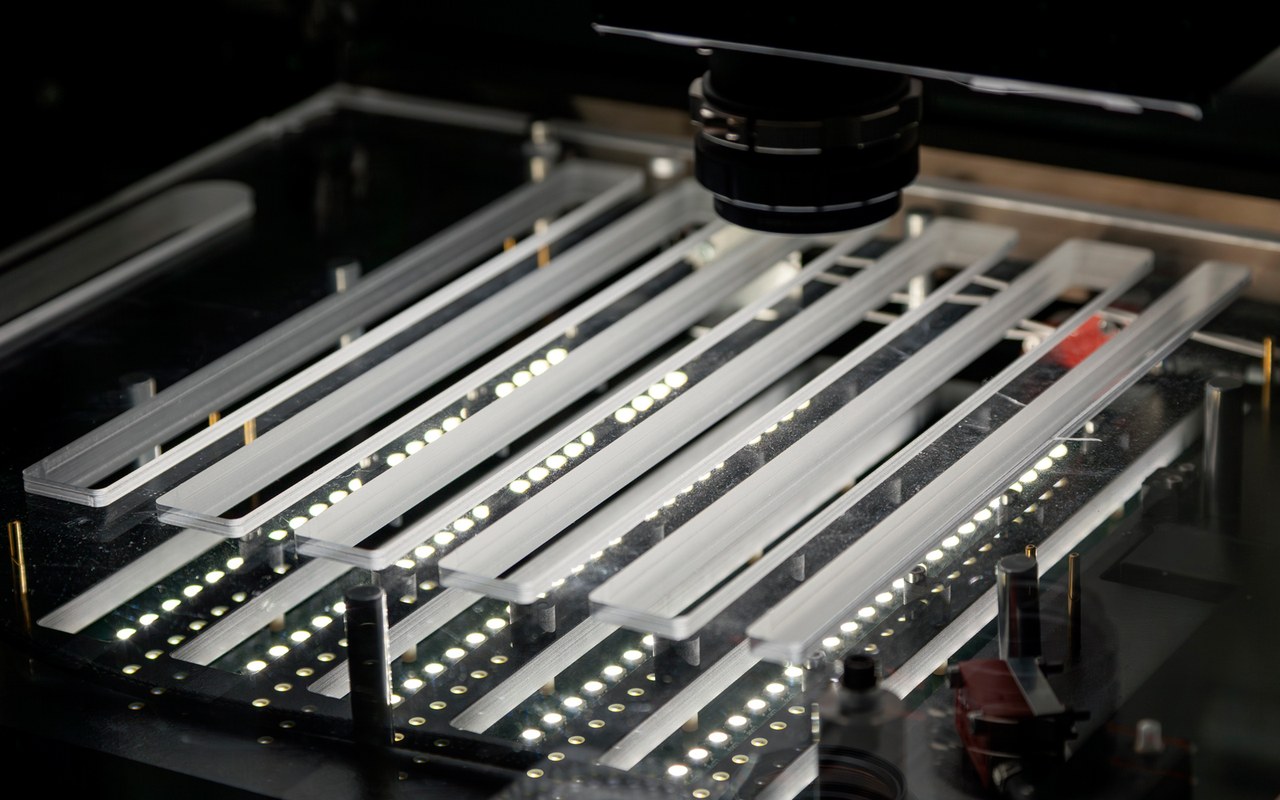
For LED modules, the SPEA T100L automatic LED light tester combines electrical validation and detailed optical analysis in a single platform, enabling flexible testing across a wide range of PCBAs and module configurations with minimal setup. Unlike conventional in-circuit testers that rely on fiber-optic probes and custom fixtures for each board design, it uses a fiberless architecture with a high-resolution flying scanner to measure the luminous output and spectral composition of individual micro-spots, even in dense LED layouts, while reducing optical crosstalk and setup complexity.
While the SPEA T100L masters the final LED module assembly, SPEA’s expertise extends deeper into the component level for manufacturers who require specialized semiconductor-grade validation for the drivers and sensors that power these modules.
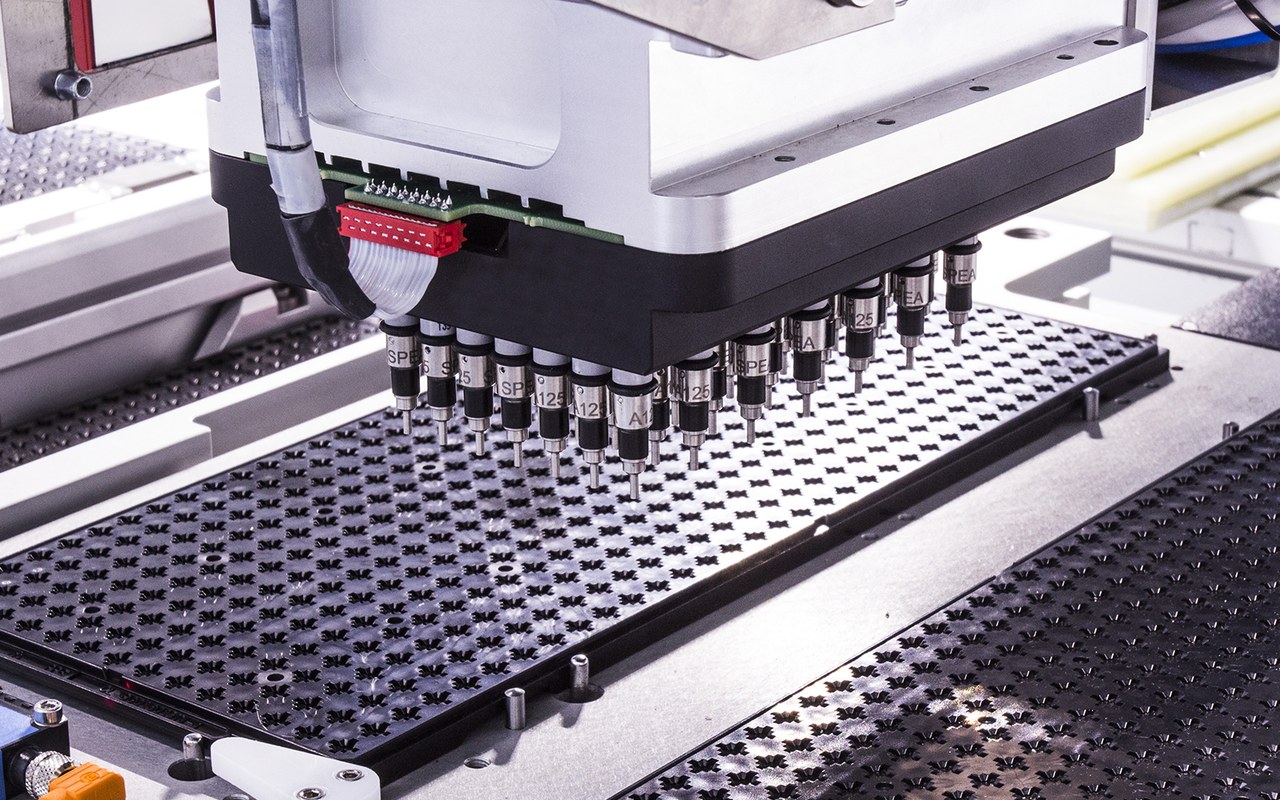
For LED drivers and smart sensors, the SPEA DOT mixed-signal test platform is designed to validate semiconductor components with high accuracy and speed, enabling precise measurement of rising and fall times, output switching frequency, short-circuit and over-current protection, to ensure flicker-free operation and device longevity. Its high-parallelism multi-site architecture helps reduce test cost per unit while maintaining production throughput. Ambient light sensors and proximity sensors require a combination of electrical testing and physical stimulus. SPEA MEMS test cell capabilities support controlled stimulus and response for testing these devices, ensuring real-world calibration accuracy without sacrificing speed. Built for high-volume production, these platforms integrate seamlessly into demanding manufacturing environments without compromising measurement quality.
Together, SPEA automatic test equipment helps manufacturers build a more complete validation strategy across the entire LED ecosystem, from semiconductor components to finished modules.
Secure your supply chain with zero-defect validation.
Talk to an LED Testing Expert Today...
_________________________________________________________
About SPEA: Backed by over 50 years of technology and innovation, SPEA is a leading global manufacturer of automatic test equipment. With more than 12,000 testers installed worldwide in over 65 countries and a staff of 1,200 people, SPEA is committed to continuous innovation to ensure, day by day, the quality and reliability of electronic products.
SPEA Automatic Test Equipment
Via Torino, 16
10088 Volpiano (TO) – Italy
www.spea.com
© 2026 Luger Research e.U. – Institute for Innovation & Technology
