
LEDs & OLEDs
Technology
|
Jul 13, 2010
The Future of OLED Lighting
 Organic light-emitting diodes (OLEDs) are currently a hot topic in the lighting industry. With major companies such as Osram, Philips, and General Electric displaying prototype products and announcing commercial availability of OLED panels for prototype lighting applications, it is difficult to ignore the industry buzz: “OLEDs are the future of lighting!”
Read more »
Organic light-emitting diodes (OLEDs) are currently a hot topic in the lighting industry. With major companies such as Osram, Philips, and General Electric displaying prototype products and announcing commercial availability of OLED panels for prototype lighting applications, it is difficult to ignore the industry buzz: “OLEDs are the future of lighting!”
Read more »
Technology
|
Jul 28, 2010
Prototype of a Red Golden Dragon Plus LED Sets New Record
 Developers at OSRAM Opto Semiconductors have succeeded in increasing the efficiency of red thin-film LEDs by 30% – a new record. The latest generation of thin-film chips benefit from an optimized chip platform which has potential for further improvements. This boost in efficiency is opening up new LED applications in general illumination, in projection and in the industrial sector.
Read more »
Developers at OSRAM Opto Semiconductors have succeeded in increasing the efficiency of red thin-film LEDs by 30% – a new record. The latest generation of thin-film chips benefit from an optimized chip platform which has potential for further improvements. This boost in efficiency is opening up new LED applications in general illumination, in projection and in the industrial sector.
Read more »
Technology
|
Jul 28, 2010
White OLED Outlook Brightens with Efficiency Breakthrough
 GE Global Research, the technology development arm for the General Electric Company (NYSE: GE), GE Lighting and Konica Minolta (KM) have achieved a major breakthrough that brings the companies closer to making high-efficiency organic light-emitting diode (OLED) lighting devices a reality. GE and KM scientists have demonstrated illumination-quality white OLEDs using “solution-coatable” materials that are essential for producing OLEDs at a low cost.
Read more »
GE Global Research, the technology development arm for the General Electric Company (NYSE: GE), GE Lighting and Konica Minolta (KM) have achieved a major breakthrough that brings the companies closer to making high-efficiency organic light-emitting diode (OLED) lighting devices a reality. GE and KM scientists have demonstrated illumination-quality white OLEDs using “solution-coatable” materials that are essential for producing OLEDs at a low cost.
Read more »
Technology
|
Jul 28, 2010
Successful Extraction of Light from Semiconductors with the Highest Efficiency
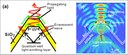 Wang XueLun, Near-Field Nano-Engineering Group, Nanotechnology Research Institute, and the National Institute of Advanced Industrial Science and Technology, succeeded in extracting light from a semiconductor into air with the highest efficiency.
Read more »
Wang XueLun, Near-Field Nano-Engineering Group, Nanotechnology Research Institute, and the National Institute of Advanced Industrial Science and Technology, succeeded in extracting light from a semiconductor into air with the highest efficiency.
Read more »
Technology
|
Jul 28, 2010
Solid-state Illumination Reduces Nitrates in Leafy Green Vegetables
Searching for ways to improve the nutritional quality of leafy green vegetables, Lithuanian researchers have found success with new technology that features high-density photosynthetic photon flux generated by a solid-state illuminator.
Read more »
Technology
|
Jul 28, 2010
Berkeley Researchers Light Up White OLEDs - A New Way To Process White OLEDs
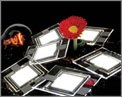 Using polymer nanoparticles to house light-emitting ‘inks’, scientists have made a thin film OLED using iridium-based guest molecules to emit various colors of visible light.
Read more »
Using polymer nanoparticles to house light-emitting ‘inks’, scientists have made a thin film OLED using iridium-based guest molecules to emit various colors of visible light.
Read more »
Technology
|
Jul 28, 2010
NREL Finds a Way to Give LEDs the Green Light
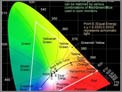 NREL scientists found a way to generate a tricky combination of green and red that may just prove to be the biggest boost for illumination since Edison's light bulb.
Read more »
NREL scientists found a way to generate a tricky combination of green and red that may just prove to be the biggest boost for illumination since Edison's light bulb.
Read more »
Technology
|
Jul 28, 2010
RTI International Develops New SSL Technology to Make Energy-Efficient Lighting
 RTI International has developed a revolutionary lighting technology that is more energy efficient than the common incandescent light bulb and does not contain mercury, making it environmentally safer than the compact fluorescent light (CFL) bulb.
Read more »
RTI International has developed a revolutionary lighting technology that is more energy efficient than the common incandescent light bulb and does not contain mercury, making it environmentally safer than the compact fluorescent light (CFL) bulb.
Read more »
Technology
|
Jul 28, 2010
Cree Breaks 200 Lumen Per Watt Efficacy Barrier
Cree, Inc. (Nasdaq: CREE), a market leader in LED lighting, announces another industry-best reported efficacy record of 208 lumens per watt for a white power LED. This R&D result passes a significant milestone within the solid-state lighting industry as well as demonstrates Cree’s relentless drive to increase the performance of its LEDs.
Read more »
Technology
|
Jul 28, 2010
Cree Achieves 186 Lumens per Watt from a High-Power LED
Cree, Inc. (Nasdaq: CREE), a market leader in LED lighting, announces it has achieved industry-best reported R&D results of 186 lumens per watt for a white power LED.
Read more »
Technology
|
Jul 28, 2010
3M Claims Record Efficacy for Green LEDs
3M Claims Record Efficacy for Green LEDs Green LED | November 24, 2009 Scientists at 3M have unveiLed a color-conversion technology that doubles the efficiency of green LEDs, compared with currently-available green emitters. The St. Paul, Minnesota-based company says that the technology could lead to accelerated adoption of LEDs in demanding applications such as LCD display backlights and pico-projectors.
Read more »
Technology
|
Jul 28, 2010
OSRAM LED Produces Warm White Light with High Efficiency and True Colors
 OSRAM Opto Semiconductors has developed an LED that offers high efficiency, excellent color rendering and a pleasant warm white light. The prototype is the first to offer the three important properties that together are essential for general illumination applications, namely a color temperature of 3000 K, a color rendering index of 82 and an efficiency of 104 lm/W.
Read more »
OSRAM Opto Semiconductors has developed an LED that offers high efficiency, excellent color rendering and a pleasant warm white light. The prototype is the first to offer the three important properties that together are essential for general illumination applications, namely a color temperature of 3000 K, a color rendering index of 82 and an efficiency of 104 lm/W.
Read more »
Technology
|
Jul 28, 2010
Ultrathin LEDs Create New Classes of Lighting and Display Systems
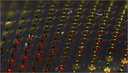 A new process for creating ultrathin, ultrasmall inorganic light-emitting diodes (LEDs) and assembling them into large arrays offers new classes of lighting and display systems with interesting properties, such as see-through construction and mechanical flexibility, that would be impossible to achieve with existing technologies.
Read more »
A new process for creating ultrathin, ultrasmall inorganic light-emitting diodes (LEDs) and assembling them into large arrays offers new classes of lighting and display systems with interesting properties, such as see-through construction and mechanical flexibility, that would be impossible to achieve with existing technologies.
Read more »
Technology
|
Jul 28, 2010
OSRAM Study: LED Life-Cycle Assessment
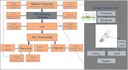 An OSRAM Opto Semiconductors` study on the life-cycle assessment (LCA) of LED lamps shows the latest generation of lamps achieves a very high score for environmental friendliness.
Read more »
An OSRAM Opto Semiconductors` study on the life-cycle assessment (LCA) of LED lamps shows the latest generation of lamps achieves a very high score for environmental friendliness.
Read more »
Technology
|
Jul 28, 2010
SRI and SDK Announce Breakthrough Performance in Organic Light-Emitting Diode (OLED) Devices for SSL Applications
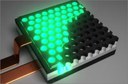 SRI International, an independent nonprofit research institute, and Showa Denko K.K. (SDK), a Japan-based chemical industry company in partnership with Itochu Plastics Inc. (CIPS), have achieved record-breaking results using SRI’s new cavity organic light-emitting diode (COLED) technology and SDK’s light-emitting polymers to produce a highly efficient light source that could one day replace incandescent and fluorescent light bulbs.
Read more »
SRI International, an independent nonprofit research institute, and Showa Denko K.K. (SDK), a Japan-based chemical industry company in partnership with Itochu Plastics Inc. (CIPS), have achieved record-breaking results using SRI’s new cavity organic light-emitting diode (COLED) technology and SDK’s light-emitting polymers to produce a highly efficient light source that could one day replace incandescent and fluorescent light bulbs.
Read more »
Technology
|
Jul 28, 2010
IMEC Launches New Industrial Affiliation Program on GaN-on-Si Technology
IMEC today announces the launch of a new industrial affiliation program (IIAP) that will focus on the development of GaN technology for both power conversion and solid state lighting applications.
Read more »
Technology
|
Jul 28, 2010
White Record OLEDs of Dresden University and Novaled Surpass Efficiency of Fluorescent Tubes
White organic light-emitting diodes (OLEDs) are a promising new technology to become the next generation light source. They have the potential of much higher efficiencies than classical lighting sources.
Read more »
Technology
|
Jul 28, 2010
Japanese Researchers Double Green Phosphorescent OLED Efficiency
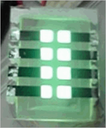 A Japanese research group succeeded in making an OLED device using a green light-emitting phosphor material and achieving a very high light-emitting efficiency of 210lm/W.
Read more »
A Japanese research group succeeded in making an OLED device using a green light-emitting phosphor material and achieving a very high light-emitting efficiency of 210lm/W.
Read more »
Technology
|
Jul 28, 2010
Lumileds claims double LED brightness
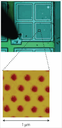 Philips Lumileds has produced what it says is the highest-extraction-efficiency photonic-crystal LED to date.
Read more »
Philips Lumileds has produced what it says is the highest-extraction-efficiency photonic-crystal LED to date.
Read more »
Technology
|
Jul 28, 2010
Compact 72-W Neutral White and 18-W Warm White LED Emitter with Record Lumen Efficiency
Optoelectronics Packaging & Materials Labs at the University of California developed a multi-chip integrated compact white LED single emitter with an import power of 72,84W, producing a total of 6543 lm at a CCT of 4455K that has reached a record lumen efficiency of 89,8 lm/W, and a multi-chip integrated warm white LED compact single emitter with an input power of 18,62W, producing a total of 1444lm at a CRI of 91,3 and a CCT of 3928K that has reached a record lumen efficiency of 77,4lm/W, according to the reports issued by the US National Institute of Standards and Technology on December 8, 2008.
Read more »
